


How OHSU is strengthening Oregon’s nursing workforce
By Josh Friesen
For Ignite Magazine
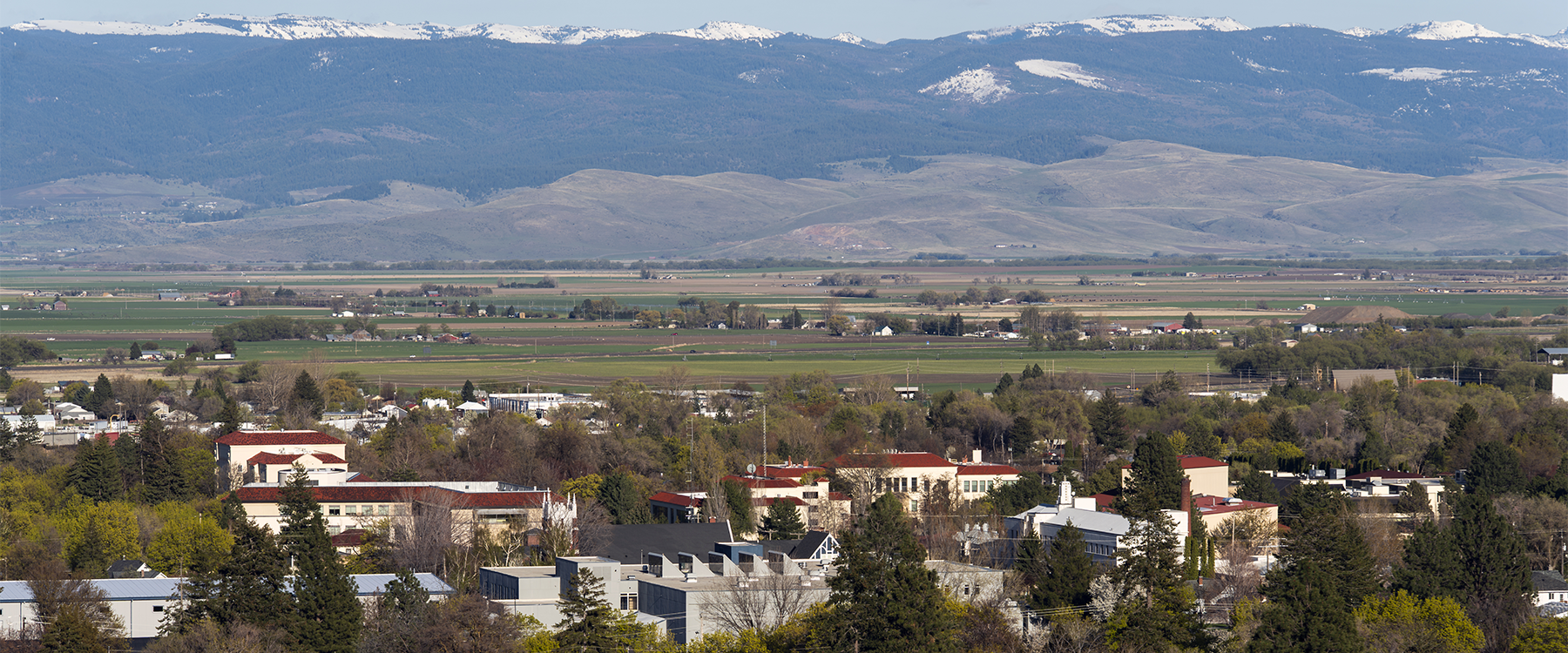
The pace of life feels a little slower in Burns, Oregon.
It makes the high desert landscape stretch a little farther, the sun linger in the sky a little longer, the horizon a little wider.
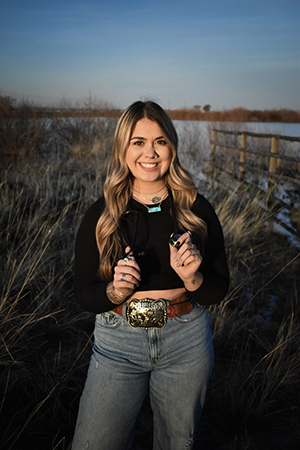
Janae Rhen, RN, B.S. ’25, is drawn to that stillness. The fast-paced fervor of nursing, however, beckons as well.
Rhen is a nurse at Harney District Hospital in Burns, a quaint town situated at the foothills of the Blue Mountains in southeast Oregon. She walks into every shift faced with a different priority. One day, it’s the medical-surgery floor. Another day, it’s the ICU. Tomorrow, maybe it’ll be labor and delivery. And on some days, her priority abruptly changes to the sudden arrival of an acute trauma patient. At a critical access hospital like Harney, the nurses see everyone.
“Some of us refer to it as ‘cowboy nursing,’” she said. “We all float around and help everybody. We don’t have code teams or rapid response teams. We are the code teams and rapid response teams.”
Rhen and her colleagues do their best with limited resources and a staff of nurses stretched thin, but their experience isn’t unique.
Across the country, healthcare systems are navigating significant shifts in the nursing workforce landscape. OHSU has been aware of these emerging dynamics and is leading the charge toward improving the state of nursing, starting in Oregon. For over the past decade, OHSU and the OHSU School of Nursing have been building sustainable pathways by increasing access to education, recruiting students from rural regions, cultivating community partnerships and developing clinical experiences that connect students to the communities they may one day serve.
“We are very mission driven in the School of Nursing,” said Susan Bakewell-Sachs, Ph.D., RN, FAAN, vice president for nursing affairs at OHSU and dean of the OHSU School of Nursing. “We’re very focused on working in relationship with our clinical partners around the state, to educate strong graduates who can meet workforce needs for highly qualified nurses, and to contribute to the health of our communities.”
A long-term focus
The number of incoming nurses is lower than the number of nurses leaving the bedside. Many refer to the issue as a nursing shortage, but the reality isn’t quite that simple.
Supply, demand, retention and distribution are the evolving, interconnected elements that make up the nursing workforce. While the supply of new nursing graduates is strong and steadily growing — nurses from out of state are drawn to Oregon’s competitive salaries for registered nurses, for example, which are among the highest in the country — a dramatic increase in care needs and higher patient acuity are reshaping demand, causing decreased staff retention and increased workplace strain.
OHSU has had a long-term focus on the nursing workforce for over a decade and is addressing the challenges with innovative solutions. Undertakings like OHSU’s 30-30-30 initiative are boosting the number of graduates in key healthcare professions, including nursing. Student support opportunities like the Oregon Rural Nursing Scholarship (ORNS) strive to recruit prospective students straight from rural communities who are passionate about providing rural healthcare.
Recruiting students from rural areas— where one-third of Oregonians live — is a major priority.
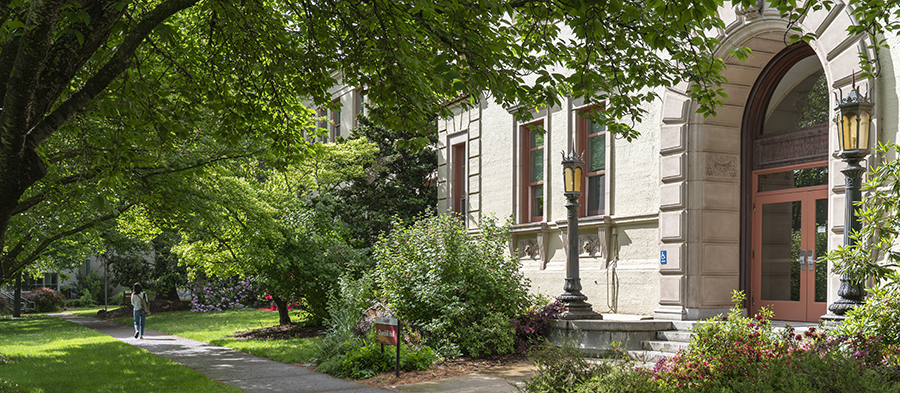
“We have a statewide footprint,” Bakewell-Sachs said. “We have five campuses in Ashland, Klamath Falls, La Grande, Monmouth and Portland. We also offer a program in Bend, so we really serve the entire state geographically.”
“Nurses are extremely important to the health of rural communities because they provide care across the entire continuum,” said Patricia Barfield, Ph.D., RN, PMHNP-BC, campus associate dean at the OHSU School of Nursing, La Grande, and regional associate dean for OHSU’s Campus for Rural Health in Northeast Oregon. “The role of a rural nurse is considered an expert generalist. They have to be ready for anything and everything in a lot of different care settings — in homes, in communities, in clinics and in hospitals.”
Students at the school’s regional campuses learn how to care for patients living in those rural areas. Faculty develop meaningful relationships with their region’s local healthcare systems and community partners to establish clinical learning experiences for students and foster trust among the population.
“OHSU has longstanding, trusting relationships around the state,” Bakewell-Sachs said. “About 70% of our graduates, over many decades, stay in Oregon. We know that we have an impact. We respect that. We feel that obligation.”
Multipronged solutions
Approved by the Oregon Legislature in 2022, the 30‑30‑30 initiative formalized OHSU’s proposal to increase the number of graduates from select health professions programs by 30% and to raise overall student body diversity to at least 30% by the year 2030. This commitment is supported through an annual $20 million state appropriation, a one‑time $25 million allocation and matching philanthropic investments through the OHSU Foundation. Within this broader institutional effort, the OHSU School of Nursing has increased its number of graduates by 22% since the 2020-21 academic year and grown student diversity from an already strong 31% to 40%, helping propel OHSU toward its system‑wide diversity and workforce expansion goals.
“Rural healthcare was the reason I got into nursing and healthcare in general. When that scholarship was presented to me, I knew I wanted to jump on the opportunity, not just because of the funding, but because of the learning opportunity it represented. I was super eager to soak up everything it offered.”
Janae Rhen, RN, B.S. ’25
Scholarships including the OHSU Provost Excellence Scholarship and the OHSU Provost Workforce Development Scholarships for undergraduate and graduate nursing students play a central role in the 30‑30‑30 initiative. Together, they are easing financial stress, expanding access to nursing education, and helping students remain engaged and supported as they prepare to enter Oregon’s healthcare workforce.
“Financial challenges are one of the biggest barriers our students face when accessing education,” said Denise Dallmann, N.D., M.S., assistant vice provost for workforce capacity development at OHSU. “By expanding these scholarships in the coming academic year to additional nursing programs and more students, we’re sending a clear message: We believe in our students, we care about their well‑being and we’re committed to their future success. When financial stress is eased, students can focus on learning, growth and becoming the health professionals our communities need.”
Private philanthropy plays a critical role in sustaining and expanding scholarships that allow students to thrive, persist and graduate. Privately funded scholarships like the Hearst Endowed Scholarship and the William G. and Ruth T. Evans Endowed Nursing Scholarship help alleviate students’ financial barriers. These investments don’t just support individual learners. They directly translate into a stronger, more resilient nursing workforce for Oregon and beyond.
Student support goes beyond graduating more nursing students. It broadens access for students from underrepresented backgrounds and rural communities.
A $4 million, four-year award funded by the Health Resources and Services Administration, the ORNS program is available for nursing students attending either the OHSU School of Nursing in La Grande or Klamath Falls. It covers the full cost of tuition and includes a $1,500 stipend during the academic year for travel to clinical sites.
Four ORNS scholars graduated from the OHSU School of Nursing in spring of 2025. All four accepted offers at rural Oregon hospitals.
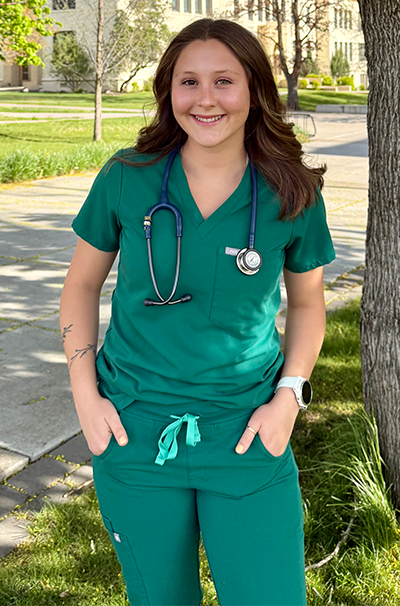
Rhen was one of them.
“Rural healthcare was the reason I got into nursing and healthcare in general,” she said. “When that scholarship was presented to me, I knew I wanted to jump on the opportunity, not just because of the funding, but because of the learning opportunity it represented. I was super eager to soak up everything it offered.”
Madelyn Nichols RN, B.S. ’26, a nursing alumnus from the OHSU School of Nursing, La Grande, received ORNS support. She grew up in Heppner, Oregon, and works as a CNA at Grande Ronde Hospital in La Grande. The scholarship, she said, was invaluable in helping her advance through the nursing program and supporting her clinical placements in rural settings. Most importantly, the support enabled her to realize her passion for providing rural healthcare.
“I definitely want to stay rural. That’s where I grew up. That’s what I love,” said Nichols, who graduated in spring of 2026. “What’s great about this program is that it provides education specifically about rural areas. We’ve done clinicals, seminars, book studies, all sorts of things to prepare us for working rural, which is amazing. It’s information and experience I’m going to use every day.”
A focus on community and wellness
Each scholarship and grant is another point of access and gives faculty members like Barfield and her team the freedom to expand students’ opportunities and widen the School of Nursing’s community impact.
Students like Nichols benefit from the efforts Barfield and other regional nursing faculty, evaluators and administrative personnel have made to strengthen community ties — and their clinical partners are engaged in their work. The OHSU School of Nursing, La Grande, for example, sends students to clinical placements across all of eastern Oregon, southeast Washington and western Idaho.
Much of Barfield’s networking efforts are supported directly by private philanthropy. One example is the Rural Ready Grant, a collaboration between the School of Nursing La Grande campus and Northeast Oregon AHEC. Funded by the Roundhouse Foundation, the grant reimburses nursing students for mileage and lodging as they travel from La Grande to Boise, Idaho, to receive training in high-risk, low-volume specialty areas such as maternal/child health and inpatient mental health.
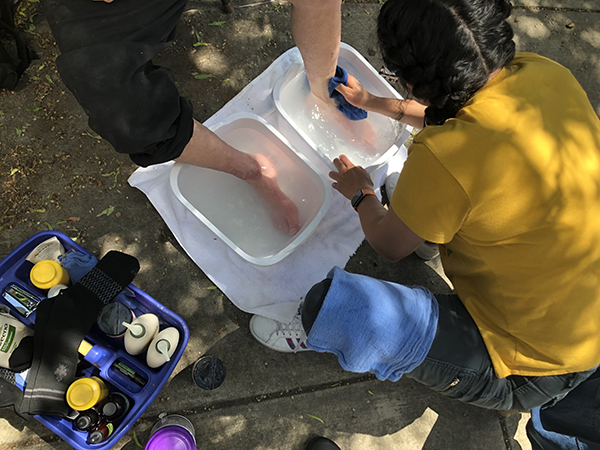
These experiences prepare students for rural practice while reinforcing a core principle of nursing: meeting people where they are. They also help strengthen connections between future nurses and the communities they will serve.
“Our overarching aim is long-term rural workforce stability,” Barfield said. “It’s not just about graduating nurses. It’s about making sure our rural communities have the nurses they need now and in the future.”
The School of Nursing’s efforts to engage communities go hand in hand with understanding social drivers of health and improving nurse wellness. The OHSU Street Nursing Team, a grant-funded program serving southern Oregon communities in Ashland, Medford, Grants Pass and Klamath Falls, provides faculty practice and clinical opportunities for nursing students who coordinate with local healthcare systems and resources to improve health and healthcare access for people experiencing homelessness.
The School of Nursing is also in the top 50 in NIH research funding for nursing schools, and clinician-scientists — alongside students — are conducting innovative research in areas such as heart failure, cancer survivorship and sleep. OHSU has developed grant-funded peer-to-peer support systems to confront workplace strain, and nursing faculty and clinical preceptors are speaking more with their students about the benefits of selfcare and relationship building.
A hopeful horizon
Rural communities are inherently tight-knit. But in Burns? For Rehn, it feels more so.
Rehn first came to Burns and Harney District Hospital for her clinical placement during her final year as a nursing student at the OHSU School of Nursing in Klamath Falls. After she graduated, she stayed to join the nursing staff.
Not long after she began, she was out walking her dog and ran into one of her patients, who thanked her for the care she provided.
“I’ll be out in the community and people will come up to me and thank me for taking care of their mother or grandmother or themselves,” Rehn said. “I think that’s beautiful.”
The nurses who graduated from OHSU, the students currently studying at one of the School of Nursing’s campuses, the nurses who will come to OHSU sometime in the future — they’re all different. They have different backgrounds, different motivations, different reasons for pursuing careers in nursing.
But they all share a common passion. They’re united by the desire to make evidence-based clinical decisions, to connect with patients and to provide the best care possible.
“It is critically important that nurses show up with what they know, as well as their heart, a commitment to relationship and meeting people where they are,” Bakewell-Sachs said. “Nurses can get all the data and read off monitors, but it’s actually knowing that patient, knowing that individual’s goals, being in a relationship, that gives nurses the fuller story.”
“What gives me hope when I look at the future of nursing and the workforce is the extraordinary strength and the heart of the people who are a part of it,” Barfield said. “We have strong national leaders in nursing. We have a dynamic state board of nursing and deeply committed academic and clinical nursing leaders across the state.”
“We’re there because we love what we do,” Rhen said. “Those are the nurses who stand apart.”